မြန်မာကျောင်းသားများအတွက် CSCA အနှစ်ချုပ်
- CSCA (China Scholastic Competency Assessment) သည် တရုတ်နိုင်ငံတွင် ဘွဲ့ကြိုတက်ရန် မြန်မာကျောင်းသားများ ဖြေဆိုအောင်မြင်ရမည့် ဝင်ခွင့်စာမေးပွဲဖြစ်သည်။
- ဘာသာရပ်များ — သင်္ချာ (ဘာသာစုံ မဖြစ်မနေ)၊ ဓာတုဗေဒ (ဆေး/ဆေးဝါး/ဇီဝ)၊ ရူပဗေဒ (အင်ဂျင်နီယာ/ကွန်ပျူတာ)၊ တရုတ်စာ (တရုတ်ဘာသာဖြင့် သင်ကြားသည့်သင်တန်းများ)။
- စာမေးပွဲပုံစံ — ကွန်ပျူတာဖြင့်ဖြေဆိုသည့် multiple-choice၊ ဘာသာရပ်တစ်ခုစီကို ၀ မှ ၁၀၀ အထိ အမှတ်ပေးသည်။
- စာမေးပွဲကြေး — ဘာသာရပ် ၁ ခုအတွက် ၄၅၀ RMB၊ ဘာသာရပ် ၂ ခုနှင့်အထက်အတွက် ၇၀၀ RMB။
- စာရင်းသွင်းရန် — တရားဝင်ဝဘ်ဆိုဒ် csca.cn တွင် အကောင့်ဖွင့်၍ စာရင်းသွင်းပါ။
- စာမေးပွဲရက်များ — ၂၀၂၆–၂၇ တွင် ၆ ကြိမ် — ၂၀၂၆ နိုဝင်ဘာ ၁၄–၁၅၊ ဒီဇင်ဘာ ၁၉–၂၀၊ ၂၀၂၇ ဇန်နဝါရီ ၂၃–၂၄၊ မတ် ၁၃–၁၄၊ ဧပြီ ၂၄–၂၅၊ ဇွန် ၂၆–၂၇။ တစ်ကြိမ်လျှင် ၂ ရက် (စနေ၊ တနင်္ဂနွေ)။
- လိုအပ်သောအမှတ် — ၇၅+ (ထိပ်တန်းတက္ကသိုလ်/scholarship)၊ ၆၀–၇၄ (အလယ်အလတ်)၊ ၅၀–၅၉ (ပြည်နယ်တက္ကသိုလ်များ)။
အသေးစိတ်ကို အောက်တွင် အင်္ဂလိပ်ဘာသာဖြင့် ဆက်လက်ဖတ်ရှုနိုင်ပါသည်။ အခမဲ့အကြံဉာဏ်အတွက် CSCA Myanmar သို့ ဆက်သွယ်ပါ →
What is the CSCA?
The single exam that now stands between Myanmar students and a Chinese university place.
The China Scholastic Competency Assessment (CSCA) is China's centralised, standardised entrance examination for international undergraduate applicants. It was introduced by China's Ministry of Education in 2025 and is administered through the China Scholarship Council (CSC) framework. The first-ever CSCA was held on 21 December 2025 — CSCA Myanmar was present.
From the 2026 academic year onward, most Chinese universities require a valid CSCA result for bachelor's-degree admission. This means Myanmar students applying for undergraduate programs in China — whether self-funded or through the CSC government scholarship — must take and pass the CSCA. It replaced the older, inconsistent, university-by-university admission tests with one transparent, comparable score.
In one line: The CSCA is China's version of a national university entrance exam for foreign students. A higher CSCA score opens better universities and bigger scholarships.
CSCA vs CSC — what's the difference?
Two things students constantly confuse. They are not the same.
CSCA — the exam
The China Scholastic Competency Assessment is the entrance test. It measures your academic knowledge in Mathematics, Sciences, and Chinese. You sit it in Myanmar before applying. Passing the CSCA is mandatory.
CSC — the scholarship
The China Scholarship Council scholarship is the Chinese government's full-funding award — it covers tuition, accommodation, and a monthly stipend. It is optional but highly competitive. You must pass the CSCA first, then apply for CSC.
Simple order of events: Take CSCA → get your score → apply to universities → apply for the CSC scholarship.
CSCA exam format & structure
Computer-based, multiple-choice, scored 0–100 per subject.
The CSCA is a computer-based, multiple-choice examination. Each subject is scored from 0 to 100, and there is no combined total — universities look at your score in each relevant subject independently. You take only the subjects your intended program requires. The standard structure is:
| Subject | Duration | Questions | Required for |
|---|---|---|---|
| Mathematics | 60 minutes | 48 questions | ALL programs |
| Physics | 60 minutes | 48 questions | Engineering, Computer Science |
| Chemistry | 60 minutes | 48 questions | Medicine, Pharmacy, Biology |
| Professional Chinese Humanities Chinese or Science Chinese | 90 minutes | 80 questions | Chinese Government Scholarship applicants; Chinese-taught programs |
Mathematics, Physics and Chemistry can be taken in Chinese or English; Professional Chinese is taken in Chinese. All papers are multiple-choice. Source: CSCA — About the exam.
You may sit the CSCA as many times as you like. Scores are valid for two years and, according to CSCA, you can usually submit your best valid score — though each university sets its own policy. That makes early preparation and re-sits a genuine strategy, not a last-minute gamble.
Is a periodic table provided in the CSCA chemistry exam?
No full periodic table is provided in the CSCA chemistry exam. Instead, the specific atomic weights or element symbols needed to answer a particular question are given directly inside that test item or its instructions (for example, H: 1, C: 12, O: 16, Na: 23). There is no interactive or complete reference periodic table on-screen. Myanmar students should memorise standard atomic numbers, the molar masses of common elements (H, C, N, O, Na, Mg, Al, S, Cl, K, Ca), and the basic periodic trends (electronegativity, atomic radius, ionisation energy) before sitting the exam.
Which subjects should you take?
Your program decides your subjects. Choose wrong and you waste an exam fee.
- Mathematics — required for every program and category. There is no CSCA path that skips Maths.
- Chemistry — required for Medicine / MBBS, Pharmacy, Dentistry, and Biological Sciences.
- Physics — required for Engineering, Computer Science, Architecture, and pure-science programs.
- Professional Chinese (Humanities Chinese or Science Chinese) — compulsory if you are applying for a Chinese Government Scholarship undergraduate programme, and required for Chinese-taught programs. Your target university and major decide which of the two versions you take.
For example, a Myanmar student aiming for MBBS in China typically takes Mathematics + Chemistry. An engineering applicant takes Mathematics + Physics. If you are applying for the Chinese Government Scholarship, add Professional Chinese to either combination — CSCA lists it as compulsory for scholarship applicants. Not sure which combination fits your goal? Use our free CSCA appraisal tool →
CSCA exam fees
The official exam fee is small — the real cost is being unprepared.
💰 450 RMB
For one subject.
💰 700 RMB
For two or more subjects — the usual choice for Medicine and Engineering applicants.
This exam fee is paid on the official CSCA platform when you register. It is completely separate from any university application fees and from CSCA Myanmar's preparation and application service.
How to register for the CSCA
Four steps on the official platform, csca.cn.
- Create your accountSign up on the official CSCA platform at csca.cn using a valid email address.
- Upload passport & detailsEnter your personal and academic information and upload your passport.
- Select subjects & sessionChoose the subjects your program requires and your preferred exam session (November or December 2026; January, March, April or June 2027).
- Pay the exam feePay 450 RMB (one subject) or 700 RMB (two or more) to confirm your seat.
Registration for the November 2026 session runs 15–21 October 2026 (Beijing time) — a one-week window about four weeks before the exam. Later windows will be announced on csca.cn. CSCA Myanmar guides Myanmar students through every step so nothing is missed — get free registration help →
Home-based exam: devices & internet
You need two devices — a Windows computer to answer on, and a phone or tablet as a second camera. Check them against CSCA's list well before exam day.
| Requirement | What CSCA requires |
|---|---|
| Computer | A genuine 64-bit Windows 10 or 11 computer (Windows 7 SP1 or later is also listed). macOS is not supported. Some devices, such as Microsoft Surface, may not run the exam client. |
| Real hardware only | One physical screen. No remote desktop, cloud PC or other remote access. Virtualisation must be switched off (Hyper-V, Windows Sandbox, WSL/WSL2, VBS). |
| Specification | Screen resolution of at least 1366×768, at least 4 GB RAM, and at least 2 GB free on the drive where the exam client is installed (CSCA suggests avoiding drive C). |
| Screen | No external monitor. No privacy film or anti-glare screen cover — the proctor must be able to see your screen clearly. |
| Webcam | The laptop's built-in camera, or a USB webcam placed directly above the screen. 720p or higher (1080p recommended). |
| Sound | A working speaker and microphone (desktop PCs need external ones). Wireless earphones are strictly prohibited. |
| Software | The latest official CSCA exam client, downloaded and tested in advance. |
| Second camera | A smartphone or tablet that can open CSCA's second-camera monitoring page, on a stable stand or tripod, with a charger or power bank. |
| Internet | At least 20 Mbps upload and download, and at least 500 KB/s to the exam system. Wired broadband is recommended; keep a 4G hotspot ready as backup. |
| No VPN | VPNs, proxies and network accelerators are not allowed. If the system test only works with one of them, your network does not meet the requirements. |
| Power | Keep both devices plugged in for the whole exam. |
Important for Myanmar students: because macOS is not supported, MacBook users must arrange a genuine Windows laptop or PC. Plan for power cuts and unstable internet too: a charged power bank, a backup hotspot and a test run on the same connection you will use on exam day.
Source: CSCA home-based test instructions, “Devices and network”, on csca.cn. Checked by CSCA Myanmar on 7 October 2026.
Home-based exam: room, desk & camera setup
The home-based CSCA is watched live by a proctor through two cameras. A wrong room layout, or one forbidden item on the desk, can cost you your score.
- Desk in a corner, pushed against two walls. A small whiteboard is the only scratch tool on it.
- Camera 1 — the computer's webcam, directly above the screen, showing your whole face and both shoulders.
- You face the wall, with your back to the room.
- Camera 2 — a phone or tablet on a tripod, behind you and to one side at about 45°, 1–1.5 m away, lens slightly above shoulder height.
- Closed, quiet, well-lit room. The door stays shut and nobody else may come in.
Room and seat
- Use a separate, quiet, well-lit, closed room. Nobody else may enter or interrupt during the exam.
- Sit in a corner. Push the desk against two walls and sit facing the wall, with your back to the room.
- Use a normal desk and chair. Answering on a bed, a sofa or your lap is not allowed.
- Public places are not allowed — parks, internet cafés, restaurants, open offices.
- School computer rooms and dormitories are not allowed, nor is any place where other people are present or where several people sit the exam together.
The two cameras
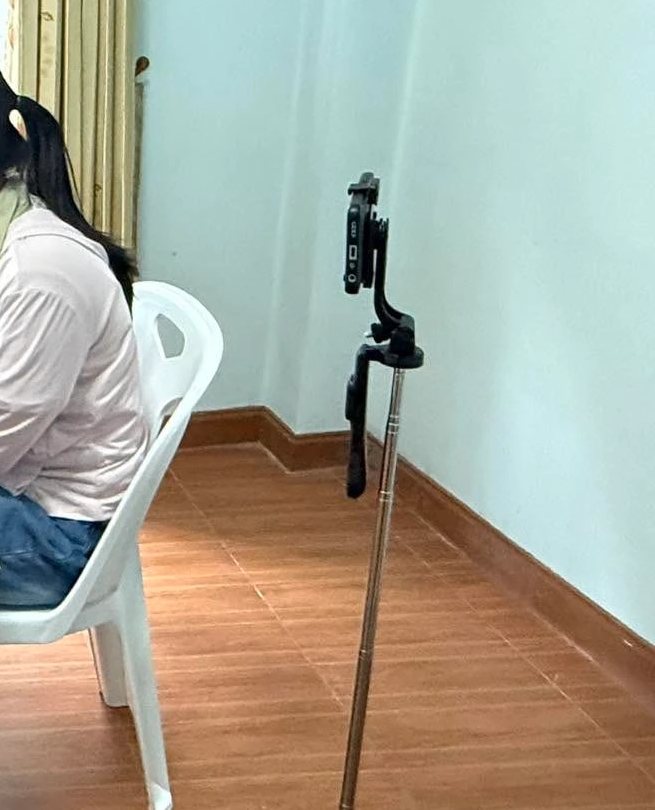
- Camera 1 (computer). Directly above the screen, facing you. It must show your whole face and both shoulders the entire time. Keep the light even, the background plain and your face uncovered.
- Camera 2 (phone or tablet). On a tripod behind you and to one side, at about 45°, roughly 1–1.5 m away, with the lens slightly above shoulder height. It must show your upper body, both hands and the computer screen.
- Set Camera 2 up properly. Turn on airplane mode, then connect Wi-Fi. Turn on Do Not Disturb, close every other app and keep it charging.
- Wrong positions. Never place Camera 2 in front of you, on the floor by your feet, or anywhere your hands cannot be seen.
- Always on. Both cameras and the microphone stay on from check-in to the end. Do not move, cover or switch them off.
What may be on your desk
Allowed
- Your Windows computer, with mouse and keyboard
- Your original passport
- Your printed admission ticket — it carries your login number and password
- One scratch tool: a small whiteboard, or one blank sheet of paper inside a transparent file sleeve
- An erasable whiteboard marker and a whiteboard eraser
Not allowed
- Ordinary scratch paper, notebooks or sticky notes
- Pens, pencils or any marker that cannot be erased
- Calculators
- Any other phone or electronic device, and wireless earphones
- Books, notes, tissues or wet wipes
- A second monitor
The proctor checks your scratch tool before and after the exam, and you must erase everything on it, on camera, when the exam ends.
Exam day, step by step
- 60 minutes before: log inThe exam system opens 60 minutes before each paper. Open the exam client, choose your language and run the system and network check. Quit antivirus software and every program that is not the exam. In Myanmar time, the first paper of the day opens for login at 11:30 in afternoon sessions and 05:30 in morning sessions.
- Verify your identityLog in with the number and password on your admission ticket, then complete face recognition. Your passport must be the original and still valid — copies and photos are not accepted.
- Connect Camera 2Scan the QR code on the computer screen with your phone or tablet to open the second-camera page.
- Show the proctor your roomHold up your passport, turn the camera through a full 360° view of the room, and show that your scratch tool is blank.
- Be ready 15 minutes before the startAll checks must be finished 15 minutes before the exam begins. Once it starts, late candidates cannot enter.
- Sit the paperThe exam goes full-screen and the timer starts. Answer with the mouse; answers save automatically, and you can go back and change them within the time. You may not leave your seat, talk to anyone or submit early.
- If something breaksUse the “call proctor” button on Camera 2 and follow the proctor's instructions. If both devices drop, restart and log in again.
- Finish properlyWait for the “submitted successfully” message, show the proctor your scratch tool and erase it, then exit. Keep the exam client installed until results are published.
Before exam day: two compulsory test runs
CSCA requires every home-based candidate to complete an individual system test of the computer, cameras, microphone and network, and at least one full mock test held at a set time. If you skip them and cannot sit or finish the exam on the day, the exam fee is not refunded. Details arrive through the registration system and by email.
Breaking the rules is costly. Depending on how serious it is, CSCA can cancel the paper or the whole session, bar you from sitting again for two years, cancel all your past scores, inform the universities that received them, or ban you for life. Source: CSCA home-based test instructions on csca.cn, checked by CSCA Myanmar on 7 October 2026.
For schools & institutes: private CSCA exam rooms
New from CSCA Myanmar — we help schools, tuition centres and institutes set up private exam rooms for the home-based CSCA.
Many students do not have a quiet room, a Windows computer, or reliable internet and power at home. A school or institute can solve that by preparing a private exam room that meets CSCA's home-based requirements — and CSCA Myanmar will help you set it up.
What we help you set up
- Room layout: a corner desk facing the wall, good lighting and a door that closes
- A compliant Windows computer, with the CSCA exam client installed and tested
- The second camera: tripod, position and phone settings
- Internet speed checks, a wired connection and a backup hotspot
- The individual system test and the mock test for each student
- An exam-day checklist and desk kit: whiteboard, erasable marker, eraser
The rules every room must follow
- One candidate per closed room. CSCA does not allow the home-based exam in computer labs, dormitories or any place where several people are present or sit the exam together.
- Nobody else in the room during the exam — including teachers and staff.
- No help of any kind. The candidate uses their own passport and admission ticket and works alone.
- The home-based exam is only offered where in-person test centres are not yet available.
A private exam room is not an official CSCA test centre. Official test centres are authorised by CSCA, and CSCA's partner page currently says that information for partners will be published later. If your institute plans to host more than one candidate on the same day, confirm the arrangement with CSCA support before students register.
CSCA exam dates & times 2026–2027
Six sessions, two days each — confirmed against the official CSCA schedule published on 24 September 2026.
The CSCA runs six times between November 2026 and June 2027. Every session takes place over one weekend: Day 1 (Saturday) is Professional Chinese and Mathematics, and Day 2 (Sunday) is Physics and Chemistry. Depending on the session, the first paper starts at 08:00 or 14:00 Beijing time — that is 06:30 or 12:30 in Myanmar.
Exam calendar
| Session | Day 1: Chinese + Maths | Day 2: Physics + Chemistry | Time block | Registration |
|---|---|---|---|---|
| November 2026 | Sat 14 Nov 2026 | Sun 15 Nov 2026 | Afternoon | 15–21 October 2026 confirmed by CSCA |
| December 2026 | Sat 19 Dec 2026 | Sun 20 Dec 2026 | Morning | Not yet announced our estimate: mid–late November 2026 |
| January 2027 | Sat 23 Jan 2027 | Sun 24 Jan 2027 | Afternoon | Not yet announced our estimate: mid–late December 2026 |
| March 2027 | Sat 13 Mar 2027 | Sun 14 Mar 2027 | Afternoon | Not yet announced our estimate: early–mid February 2027 |
| April 2027 | Sat 24 Apr 2027 | Sun 25 Apr 2027 | Afternoon | Not yet announced our estimate: late March 2027 |
| June 2027 | Sat 26 Jun 2027 | Sun 27 Jun 2027 | Morning | Not yet announced our estimate: late May 2027 |
Registration estimates are CSCA Myanmar's own projection from the November window, which opens about four weeks before the exam. They are not official: CSCA has not announced those windows yet.
Timetable in Myanmar time — afternoon sessions
November 2026, January 2027, March 2027 and April 2027.
| Day | Subject | Myanmar (UTC+6:30) | Beijing (UTC+8) | Bangkok (UTC+7) | Length |
|---|---|---|---|---|---|
| Day 1 | Professional Chinese | 12:30–14:00 | 14:00–15:30 | 13:00–14:30 | 90 min |
| Day 1 | Mathematics | 15:30–16:30 | 17:00–18:00 | 16:00–17:00 | 60 min |
| Day 2 | Physics | 12:30–13:30 | 14:00–15:00 | 13:00–14:00 | 60 min |
| Day 2 | Chemistry | 15:00–16:00 | 16:30–17:30 | 15:30–16:30 | 60 min |
Timetable in Myanmar time — morning sessions
December 2026 and June 2027.
| Day | Subject | Myanmar (UTC+6:30) | Beijing (UTC+8) | Bangkok (UTC+7) | Length |
|---|---|---|---|---|---|
| Day 1 | Professional Chinese | 06:30–08:00 | 08:00–09:30 | 07:00–08:30 | 90 min |
| Day 1 | Mathematics | 09:30–10:30 | 11:00–12:00 | 10:00–11:00 | 60 min |
| Day 2 | Physics | 06:30–07:30 | 08:00–09:00 | 07:00–08:00 | 60 min |
| Day 2 | Chemistry | 09:00–10:00 | 10:30–11:30 | 09:30–10:30 | 60 min |
What to know before you plan
- Official times are Beijing time. Myanmar is 1 hour 30 minutes behind Beijing and Bangkok is 1 hour behind. CSCA asks candidates in other time zones to convert the times themselves — the tables above do it for you.
- Morning sessions start early. In December and June the first paper begins at 06:30 Myanmar time, so check your device, camera and internet the night before.
- Home-based and in-person tests run together. The home-based online test and the in-person computer-based test are held at the same time, with the same questions, length and scoring.
- Results within 10 working days. From the November 2026 session onward, results are published within 10 working days after the exam.
- Your admission ticket is final. If CSCA adjusts the arrangement, the notice for that session and your admission ticket take priority over any published timetable, including this one.
Source: “CSCA Test Schedule for November 2026 – June 2027” (News & Announcements, 24 September 2026) on the official site csca.cn. Checked by CSCA Myanmar on 5 October 2026. The first-ever CSCA was held on 21 December 2025 — CSCA Myanmar was present.
Because the exam repeats and you can usually submit your best valid score, we recommend Myanmar students begin preparation 3–4 months before their target CSC scholarship deadline (CSC applications typically run December–April). Need help choosing a session? Ask us for free →
What score do you need?
There is no official pass mark. Each university sets its own bar.
These are guides based on historical admission patterns, not guarantees — competition, seats, and program demand shift each year. Want a personalised prediction from your own marks? Try the free CSCA marks appraisal →
Applying to universities & the CSC scholarship
The full journey, from exam to admission letter.
- Prepare & sit the CSCAChoose your subjects, register on csca.cn, prepare, and take the exam.
- Get your score & shortlist universitiesMatch your scores to realistic universities and programs (our appraisal tool does this instantly).
- Prepare your documentsTranscripts, diplomas, passport, personal statement / study plan, two recommendation letters, physical examination form, and language certificates (HSK or IELTS/TOEFL where required).
- Apply to universities & CSCSubmit applications to multiple universities and apply for the CSC scholarship through an accredited agency.
- Receive offers & visaAccept your best offer, receive your JW202 form and admission letter, and apply for your X-visa to China.
The CSC scholarship covers tuition, accommodation, and a monthly stipend (around CNY 2,500 for undergraduates), plus comprehensive medical insurance — effectively reducing the cost of studying in China to near zero for successful applicants.
Best universities for Myanmar students
Ranked by the QS World University Rankings by Subject — Life Sciences & Medicine (2025), the fairest measure for our largely medicine-bound students.
| Tier | Universities | Best for |
|---|---|---|
| Tier 1 QS L&M Top ~150 | Peking, Shanghai Jiao Tong, Fudan, Zhejiang, Tsinghua, Sun Yat-sen, Sichuan (West China) | Top scorers (75+), full scholarships |
| Tier 2 QS L&M ~150–400 | Central South (Xiangya), Huazhong (Tongji), Wuhan, Nanjing, Xi'an Jiaotong, Shandong, Jilin, China Medical | Strong scorers (60–74) |
| Tier 3 Regional medical | Wenzhou, Dalian, Chongqing, Kunming, Guangxi, Guangzhou, Fujian, Guizhou Medical Universities | Accessible MBBS, close to Myanmar, affordable |
CSCA Myanmar works with 393+ Chinese universities. See the full searchable list with tiers, deadlines and application fees on our Universities page →
Planning to study medicine? Before you choose a university, read After your MBBS in China: where can you practise? → — our country-by-country licensing guide.
Why work with CSCA Myanmar
Myanmar's first and only ethical CSCA & CSC preparation service.
- Founded 2018 in Yangon — 670+ documented Myanmar student admissions to Chinese universities.
- 100% scholarship success rate — we only take on cases we genuinely believe we can win, and we are honest about borderline profiles.
- Present at the world's first CSCA exam on 21 December 2025 — we understand the real exam, not rumours.
- No hidden fees, no university kickbacks, no exclusive contracts — transparent, student-first guidance.
- Full service — subject preparation, CSCA registration, university shortlisting, document handling, CSC application, and visa support.
မြန်မာဘာသာဖြင့် CSCA လမ်းညွှန်
အထက်ပါ အင်္ဂလိပ်ဘာသာ လမ်းညွှန်၏ အဓိကအချက်များကို မြန်မာဘာသာဖြင့် အပြည့်အစုံ ဖော်ပြထားခြင်းဖြစ်သည်။
CSCA ဆိုတာ ဘာလဲ?
CSCA (China Scholastic Competency Assessment) သည် တရုတ်နိုင်ငံ၏ နိုင်ငံတကာကျောင်းသားများအတွက် တစ်ပြေးညီ တက္ကသိုလ်ဝင်ခွင့်စာမေးပွဲဖြစ်ပြီး ၂၀၂၅ ခုနှစ်တွင် စတင်ကျင်းပခဲ့သည်။ ပထမဆုံး CSCA ကို ၂၀၂၅ ခုနှစ် ဒီဇင်ဘာလ ၂၁ ရက်နေ့တွင် ကျင်းပခဲ့သည် (CSCA Myanmar တက်ရောက်ခဲ့သည်)။ ၂၀၂၆ ပညာသင်နှစ်မှစ၍ တရုတ်တက္ကသိုလ်အများစုတွင် ဘွဲ့ကြိုတက်ရန်အတွက် CSCA အောင်မြင်ရန် လိုအပ်သည်။
CSCA နှင့် CSC ကွာခြားချက်
CSCA သည် ဝင်ခွင့်စာမေးပွဲဖြစ်သည်။ CSC (China Scholarship Council) သည် တရုတ်အစိုးရ၏ ပညာသင်ဆုဖြစ်ပြီး ကျောင်းလခ၊ နေထိုင်စရိတ်နှင့် လစဉ်ထောက်ပံ့ကြေးကို အကျုံးဝင်သည်။ CSCA ကို အရင်အောင်မြင်ရမည်၊ ထို့နောက်မှ CSC ကို လျှောက်ထားရသည်။
ဘယ်ဘာသာရပ်တွေ ဖြေရမလဲ?
- သင်္ချာ — ဘာသာစုံအတွက် မဖြစ်မနေ ဖြေရသည်။
- ဓာတုဗေဒ — ဆေး (MBBS)၊ ဆေးဝါး၊ ဇီဝဗေဒ ဘာသာရပ်များအတွက်။
- ရူပဗေဒ — အင်ဂျင်နီယာ၊ ကွန်ပျူတာသိပ္ပံ ဘာသာရပ်များအတွက်။
- တရုတ်စာ — တရုတ်ဘာသာဖြင့် သင်ကြားသည့် သင်တန်းများအတွက်။
စာမေးပွဲပုံစံ
ကွန်ပျူတာဖြင့် ဖြေဆိုသည့် multiple-choice စာမေးပွဲဖြစ်သည်။ ဘာသာရပ်တစ်ခုစီကို ၀ မှ ၁၀၀ အထိ အမှတ်ပေးသည်။ သင်္ချာ၊ ရူပဗေဒ၊ ဓာတုဗေဒ တစ်ခုစီ ၆၀ မိနစ်၊ မေးခွန်း ၄၈ ခု။ တရုတ်စာ (Professional Chinese) ၉၀ မိနစ်၊ မေးခွန်း ၈၀ ခု။
စာမေးပွဲကြေး
ဘာသာရပ် ၁ ခုအတွက် ၄၅၀ RMB၊ ဘာသာရပ် ၂ ခုနှင့်အထက်အတွက် ၇၀၀ RMB။ ဤကြေးကို တရားဝင်ဝဘ်ဆိုဒ်တွင် ပေးဆောင်ရသည်။
စာရင်းသွင်းနည်း (csca.cn)
- တရားဝင်ဝဘ်ဆိုဒ် csca.cn တွင် အကောင့်ဖွင့်ပါ။
- ပတ်စ်ပို့နှင့် ကိုယ်ရေးအချက်အလက်များ တင်ပါ။
- ဘာသာရပ်နှင့် စာမေးပွဲရက် ရွေးချယ်ပါ။
- စာမေးပွဲကြေး ပေးဆောင်၍ နေရာ အတည်ပြုပါ။
စာမေးပွဲရက်များ
၂၀၂၆–၂၇ အတွက် CSCA စာမေးပွဲကို ၆ ကြိမ် ကျင်းပမည် — ၂၀၂၆ နိုဝင်ဘာ ၁၄–၁၅၊ ဒီဇင်ဘာ ၁၉–၂၀၊ ၂၀၂၇ ဇန်နဝါရီ ၂၃–၂၄၊ မတ် ၁၃–၁၄၊ ဧပြီ ၂၄–၂၅ နှင့် ဇွန် ၂၆–၂၇။ တစ်ကြိမ်လျှင် ၂ ရက် (စနေ၊ တနင်္ဂနွေ) ဖြစ်ပြီး ပထမနေ့တွင် တရုတ်စာ (Professional Chinese) နှင့် သင်္ချာ၊ ဒုတိယနေ့တွင် ရူပဗေဒနှင့် ဓာတုဗေဒ ဖြေဆိုရသည်။ အကြိမ်အရေအတွက် ကန့်သတ်မထားပါ။ အမှတ်များသည် ၂ နှစ် သက်တမ်းရှိပြီး အများအားဖြင့် အမြင့်ဆုံးအမှတ်ကို တင်သွင်းနိုင်သည် (တက္ကသိုလ်အလိုက် ကွဲပြားနိုင်သည်)။
မြန်မာစံတော်ချိန် (ဘေဂျင်းအချိန်ထက် ၁ နာရီ ၃၀ မိနစ် နောက်ကျသည်) —
- နေ့လယ်ပိုင်း (နိုဝင်ဘာ၊ ဇန်နဝါရီ၊ မတ်၊ ဧပြီ) — တရုတ်စာ ၁၂:၃၀–၁၄:၀၀၊ သင်္ချာ ၁၅:၃၀–၁၆:၃၀၊ ရူပဗေဒ ၁၂:၃၀–၁၃:၃၀၊ ဓာတုဗေဒ ၁၅:၀၀–၁၆:၀၀။
- မနက်ပိုင်း (ဒီဇင်ဘာ၊ ဇွန်) — တရုတ်စာ ၀၆:၃၀–၀၈:၀၀၊ သင်္ချာ ၀၉:၃၀–၁၀:၃၀၊ ရူပဗေဒ ၀၆:၃၀–၀၇:၃၀၊ ဓာတုဗေဒ ၀၉:၀၀–၁၀:၀၀။
- နိုဝင်ဘာစာမေးပွဲ စာရင်းသွင်းရက် — ၂၀၂၆ အောက်တိုဘာ ၁၅ မှ ၂၁ ရက်အထိ (csca.cn)။
- ရလဒ် — စာမေးပွဲပြီး အလုပ်လုပ်ရက် ၁၀ ရက်အတွင်း ထုတ်ပြန်မည်။
လိုအပ်သော အမှတ်
- ၇၅+ — ထိပ်တန်း 985 တက္ကသိုလ်များ · CSC ပညာသင်ဆု ရနိုင်။
- ၆၀–၇၄ — အလယ်အလတ် 211 တက္ကသိုလ်များ။
- ၅၀–၅၉ — ပြည်နယ်တက္ကသိုလ်များ။
ဓာတုဗေဒတွင် Periodic Table ရနိုင်ပါသလား?
Periodic table အပြည့်အစုံကို မပေးပါ။ လိုအပ်သော အက်တမ်အလေးချိန် သို့မဟုတ် ဒြပ်စင်သင်္ကေတများကို မေးခွန်းအတွင်း၌ တိုက်ရိုက်ဖော်ပြပေးသည် (ဥပမာ — H: 1, C: 12, O: 16, Na: 23)။ ထို့ကြောင့် ဒြပ်စင်များ၏ မိုလာထုထည်နှင့် အခြေခံ periodic trend များကို ကြိုတင် အလွတ်ကျက်ထားသင့်သည်။
စာမေးပွဲအတွက် ကွန်ပျူတာ လိုအပ်ချက်
CSCA ကို မိမိကိုယ်ပိုင် ကွန်ပျူတာဖြင့် remote proctoring အောက်တွင် ဖြေဆိုရသည်။ လိုအပ်ချက်များ —
- Windows 10 သို့မဟုတ် 11 (64-bit) တရားဝင်လိုင်စင်ရှိသော ကွန်ပျူတာ။ Mac / macOS ကို လက်မခံပါ။
- အနည်းဆုံး RAM 4 GB၊ လွတ်နေရာ 2 GB။ software ကို Drive D သို့မဟုတ် E တွင် install လုပ်ပါ (Drive C မဟုတ်)။
- မျက်နှာပြင် 1366×768 အနည်းဆုံး၊ Monitor တစ်ခုတည်းသာ (external monitor၊ anti-glare cover၊ privacy screen မရ)။
- Webcam 720p အထက်၊ speaker နှင့် microphone။ ကြိုးမဲ့ headphone/headset လုံးဝ မရပါ။
- တရားဝင် CSCA Test Client software ကို ကြိုတင် install ထားရမည်။ Virtual machine နှင့် remote desktop များကို ပိတ်ထားသည်။
အိမ်မှဖြေဆိုရာတွင် အခန်းနှင့် ကင်မရာ ပြင်ဆင်ပုံ
- တစ်ဦးတည်းသာရှိသော၊ တိတ်ဆိတ်၍ အလင်းရောင်ကောင်းသည့် တံခါးပိတ်အခန်းတွင် ဖြေဆိုရမည်။ ကွန်ပျူတာခန်း၊ အဆောင်ကဲ့သို့ လူအများရှိသည့်နေရာများတွင် ဖြေဆိုခွင့်မရှိပါ။
- စားပွဲကို အခန်းထောင့်တွင် နံရံနှစ်ဖက်နှင့်ကပ်ထားပြီး နံရံဘက်သို့ မျက်နှာမူ၍ ထိုင်ပါ။
- ကင်မရာ ၁ — ကွန်ပျူတာကင်မရာ (မျက်နှာနှင့် ပခုံးနှစ်ဖက် မြင်ရမည်)။ ကင်မရာ ၂ — ဖုန်း သို့မဟုတ် tablet ကို tripod ဖြင့် သင့်နောက်ဘက်ဘေး ၄၅ ဒီဂရီ၊ ၁–၁.၅ မီတာအကွာတွင် ထားပါ။
- စာရွက်၊ ဘောပင်၊ ခဲတံနှင့် calculator မသုံးရပါ။ whiteboard အသေးနှင့် ဖျက်၍ရသော marker ကိုသာ သုံးနိုင်သည်။
- စာမေးပွဲမစမီ ၆၀ မိနစ်အလိုတွင် စနစ်ထဲသို့ ဝင်ပါ။ မူရင်း passport နှင့် ပုံနှိပ်ထားသော admission ticket ကို စားပွဲပေါ်တွင် ထားပါ။
CSCA Myanmar သည် ၂၀၁၈ ခုနှစ်မှစ၍ မြန်မာကျောင်းသား ၆၇၀+ ကို တရုတ်တက္ကသိုလ်များသို့ အောင်မြင်စွာ ပို့ဆောင်ပေးခဲ့သည်။ အခမဲ့ အကြံဉာဏ်အတွက် ယနေ့ပင် ဆက်သွယ်ပါ — Viber +959786482236။
Frequently asked questions
CSCA has confirmed six exam sessions for the 2026–27 cycle, each held over a Saturday and Sunday:
- 14–15 November 2026 — afternoon session
- 19–20 December 2026 — morning session
- 23–24 January 2027 — afternoon session
- 13–14 March 2027 — afternoon session
- 24–25 April 2027 — afternoon session
- 26–27 June 2027 — morning session
Day 1 is Professional Chinese and Mathematics; Day 2 is Physics and Chemistry. Source: the official “CSCA Test Schedule for November 2026 – June 2027”, published on csca.cn on 24 September 2026. See the full calendar and timetable →
Official CSCA times are given in Beijing time (UTC+8). Myanmar (UTC+6:30) is 1 hour 30 minutes behind Beijing.
Afternoon sessions — November 2026, January, March and April 2027 (Myanmar time):
- Day 1: Professional Chinese 12:30–14:00 · Mathematics 15:30–16:30
- Day 2: Physics 12:30–13:30 · Chemistry 15:00–16:00
Morning sessions — December 2026 and June 2027 (Myanmar time):
- Day 1: Professional Chinese 06:30–08:00 · Mathematics 09:30–10:30
- Day 2: Physics 06:30–07:30 · Chemistry 09:00–10:00
In Beijing time the first paper starts at 14:00 in afternoon sessions and 08:00 in morning sessions. Students sitting from Thailand should note that Bangkok is 1 hour behind Beijing. Your admission ticket is the final authority on your start time. See the timetable with Beijing and Bangkok times →
Registration for the 14–15 November 2026 session runs from 15 to 21 October 2026 (Beijing time) on the official platform csca.cn — a one-week window.
CSCA has not yet announced registration dates for the later sessions. Based on the November pattern, where registration opens about four weeks before the exam, CSCA Myanmar estimates mid-to-late November for the December session, mid-to-late December for January, early-to-mid February for March, late March for April and late May for June. These are our estimates, not official dates, so confirm on csca.cn before you plan.
- Day 1: Professional Chinese (Humanities Chinese or Science Chinese) — 90 minutes, 80 multiple-choice questions; then Mathematics — 60 minutes, 48 multiple-choice questions.
- Day 2: Physics, then Chemistry — each 60 minutes, 48 multiple-choice questions.
Every subject is scored 0–100, and Mathematics, Physics and Chemistry can be taken in Chinese or English. You sit only the papers you registered for. According to CSCA, applicants for Chinese Government Scholarship undergraduate programmes must take Mathematics and Professional Chinese, with Physics and Chemistry depending on the university and major; for other applicants, Professional Chinese is required for Chinese-taught programmes.
From the November 2026 session onward, CSCA publishes results within 10 working days after the exam, for both home-based online tests and in-person computer-based tests. Plan your university applications and document deadlines around that date.
- Six sessions instead of five — a November session has been added before December.
- Two exam days per session — Professional Chinese and Mathematics on Day 1, Physics and Chemistry on Day 2.
- Fixed start times — the first paper begins at either 08:00 or 14:00 Beijing time (06:30 or 12:30 in Myanmar), depending on the session.
Home-based online tests and in-person tests are held at the same time with the same questions, length and scoring.
- Use a separate, quiet, well-lit, closed room where nobody else can enter during the exam.
- Sit in a corner: push the desk against two walls and face the wall, with your back to the room.
- Use a normal desk and chair — not a bed, sofa or your lap — and keep only exam items on the desk.
CSCA does not allow the home-based exam in public places such as cafés, internet cafés or open offices, or in school computer rooms, dormitories or any place where other people are present or several people sit the exam together. See the room layout diagram →
- Camera 1 — your computer's webcam, directly above the screen and facing you, showing your whole face and both shoulders. It must be 720p or higher.
- Camera 2 — a smartphone or tablet on a stable stand or tripod, behind you and to one side at about 45°, roughly 1–1.5 m away, with the lens slightly above shoulder height, so that it shows your upper body, both hands and the computer screen.
Put the phone in airplane mode and then connect Wi-Fi, turn on Do Not Disturb, close other apps and keep it charging. Both cameras and the microphone must stay on, unmoved and uncovered, for the whole exam.
- Computer: a genuine 64-bit Windows computer — Windows 10 or 11, or Windows 7 SP1 or later. macOS is not supported, and some devices such as Microsoft Surface may not run the exam client.
- Setup: one physical screen, at least 1366×768, at least 4 GB of RAM and 2 GB of free space for the exam client, with virtualisation features such as Hyper-V, Windows Sandbox and WSL switched off. Remote desktops, cloud PCs, external monitors and privacy or anti-glare screen films are not allowed.
- Camera and sound: a 720p or better webcam, a speaker and a microphone. Wireless earphones are prohibited.
- Second camera: a smartphone or tablet on a tripod.
- Internet: at least 20 Mbps up and down, ideally wired, with a 4G hotspot as backup. VPNs, proxies and network accelerators are not allowed.
No. Ordinary scratch paper, notebooks, sticky notes, pencils and ballpoint pens are not allowed in the home-based CSCA, and calculators are strictly prohibited.
For working out, you may use a small whiteboard, or one blank sheet of paper placed inside a transparent file sleeve, together with an erasable whiteboard marker and a whiteboard eraser. The proctor checks your scratch tool before and after the exam, and you must erase everything on camera when the exam ends.
Phones and other electronic devices (apart from the phone or tablet used as the second camera), wireless earphones, books, notes, tissues and wet wipes are also not allowed.
The exam system opens 60 minutes before each paper, and all checks must be finished 15 minutes before the start; once the exam begins, late candidates cannot enter.
- Have your original passport and printed admission ticket on the desk — the ticket carries your login number and password, and copies or photos of the passport are not accepted.
- Log in, complete face recognition, and scan a QR code to connect the second camera.
- Show the proctor your passport, a 360° view of the room and your blank scratch tool.
- Answer with the mouse; answers save automatically. You may not leave your seat or submit early.
- At the end, wait for the “submitted successfully” message and erase your scratch tool on camera.
Yes. CSCA requires every home-based candidate to complete two things before the real exam: an individual system test of the computer, cameras, microphone and network, and at least one full mock test held at a set time.
If you skip them and cannot sit or finish the exam on the day, the responsibility is yours and the exam fee is not refunded. Details and download links are sent through the registration system and to your registered email.
Only if you are alone in a closed room. CSCA does not allow the home-based exam in school computer rooms, dormitories or any place where other people are present or several people sit the exam together, and the home-based exam is only offered in countries and regions where in-person test centres are not yet available.
A school or institute can prepare a private exam room — one candidate per closed room, with a corner desk, a compliant Windows computer, a second camera on a tripod and stable internet — and CSCA Myanmar helps schools and institutes set these rooms up. A private exam room is not an official CSCA test centre; official test centres are authorised by CSCA. How private exam rooms work →
Yes. From the 2026 academic year, most Chinese universities require a valid CSCA result for bachelor's-degree admission. Myanmar students applying for undergraduate programs — self-funded or via the CSC scholarship — must take and pass the CSCA.
It is a computer-based, multiple-choice exam scored 0–100 per subject. Mathematics, Physics, and Chemistry are each 60 minutes with 48 questions; Professional Chinese is 90 minutes with 80 questions. You take only the subjects your program requires.
450 RMB for one subject, or 700 RMB for two or more subjects. This is the official exam fee paid on the CSCA platform, separate from university and service fees.
On the official platform csca.cn: create an account, upload your passport and details, select subjects and an exam session, and pay the fee. CSCA Myanmar can guide you through the whole process.
Yes. CSCA does not limit how many times you sit, and there are six sessions in the 2026–27 cycle (November and December 2026; January, March, April and June 2027). Scores are valid for two years, and CSCA says candidates can usually submit their best valid score, although each university sets its own policy.
Not necessarily. Many programs — including MBBS and many engineering and business degrees — are taught fully in English. Chinese-taught programs require HSK proficiency, and you would then take the CSCA Chinese Language paper.
No full periodic table is provided. The atomic weights or element symbols needed for a question are given directly within that test item (e.g. H: 1, C: 12, O: 16, Na: 23) — there is no complete on-screen reference table. Memorise standard atomic numbers, the molar masses of common elements (H, C, N, O, Na, Mg, Al, S, Cl, K, Ca), and basic periodic trends before the exam.
There is no fixed pass mark, but 75+ per subject is competitive for top 985 universities and full CSC scholarships, 60–74 suits mid-level 211 universities, and 50–59 opens provincial universities. Use our appraisal tool for a personalised prediction.
Ready to start your China journey?
Book a free consultation with CSCA Myanmar. We'll review your goals, recommend your subjects and universities, and map your path to a scholarship — honestly and expertly.